 Thumbnail View
When Working with Books, Thumbnail view displays all the pages of your book. The book page templates are available in the Template Resource Area below.
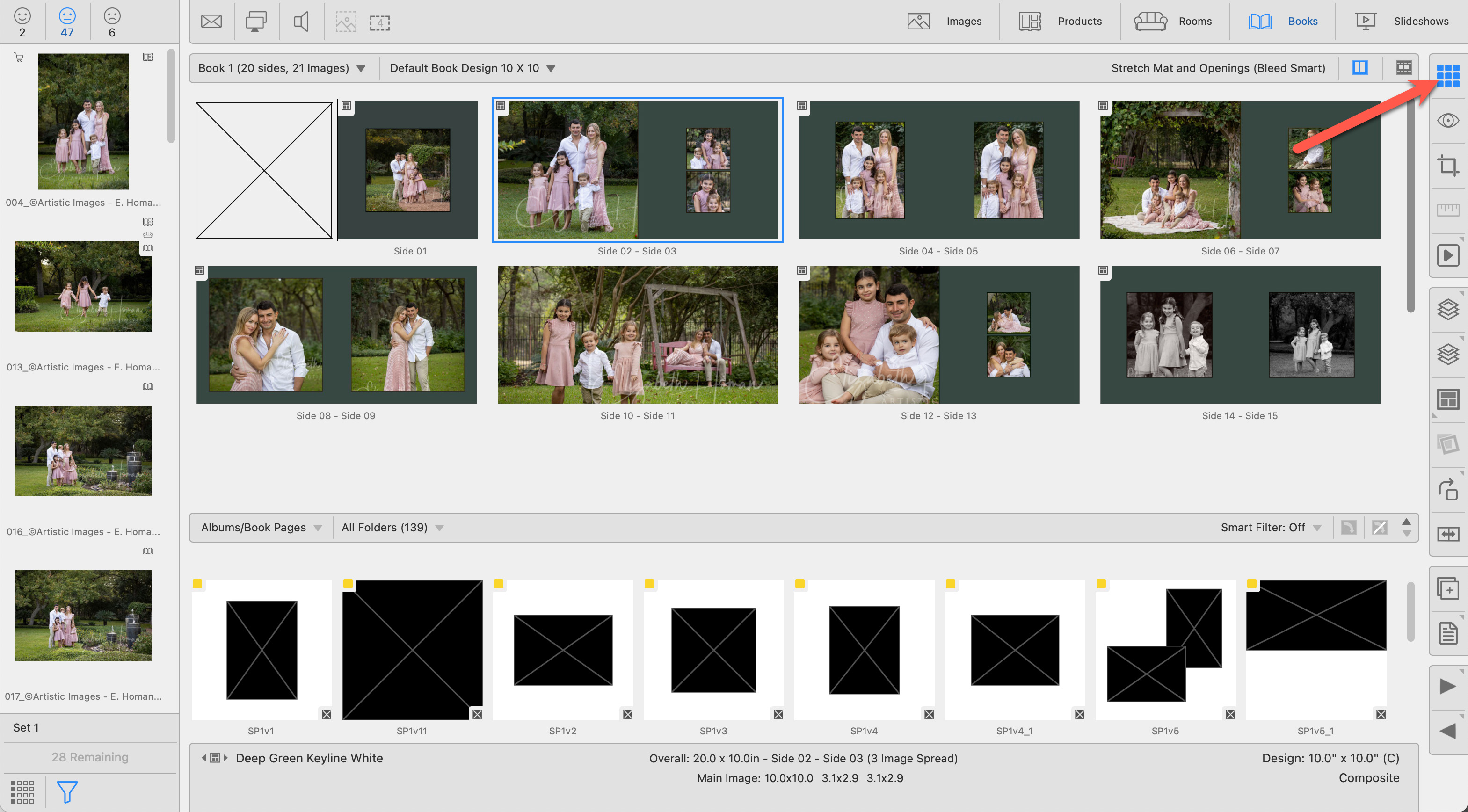
How to Access Thumbnail View
- Click on the Thumbnail view button . It is the topmost View button located on the right-hand side.
- When in a different View, press the "T" key to toggle between Thumbnail view and Show Pages view.
- On the top menu, go to View > Thumbnails.
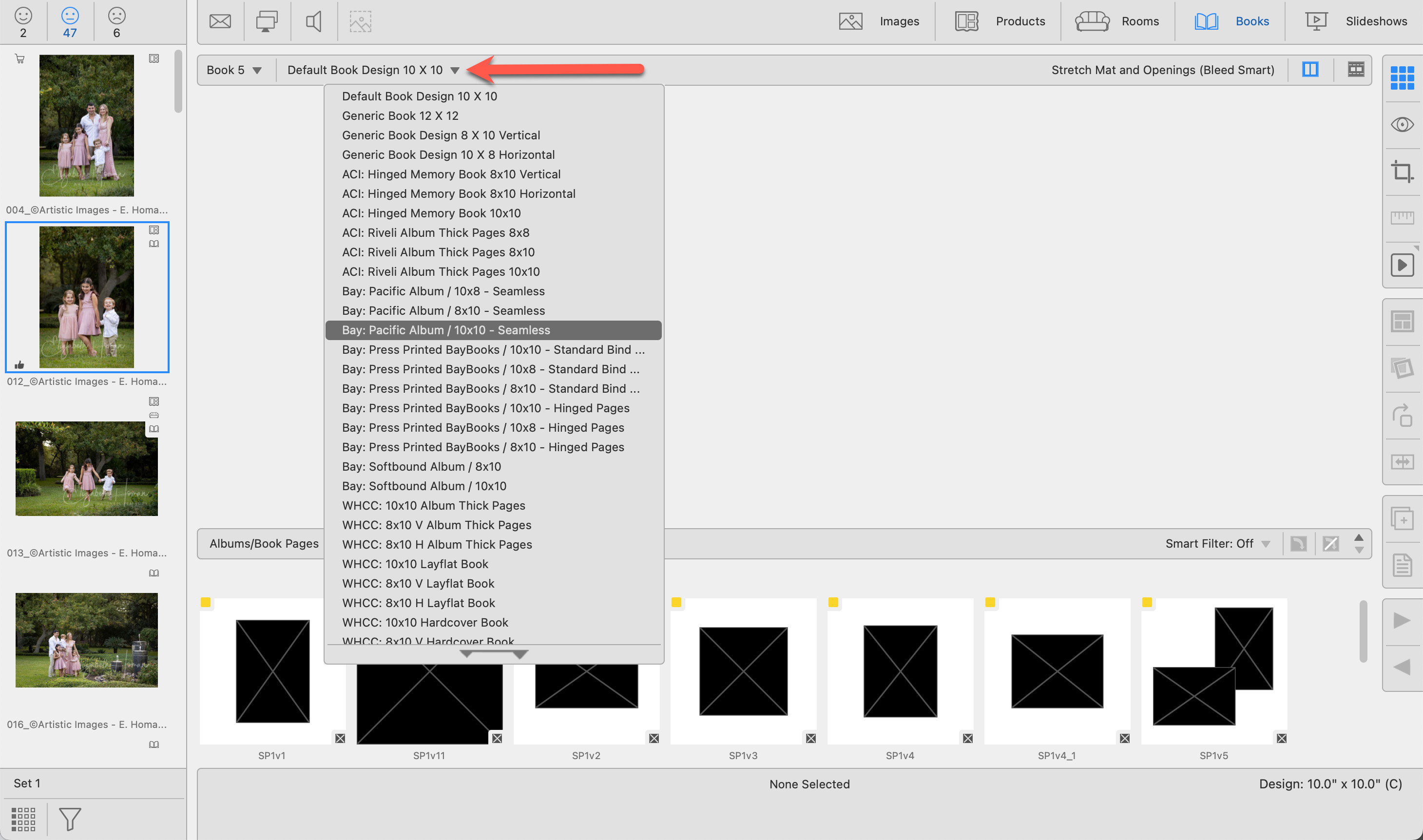
Before beginning any book, you must first select a book design.
- Go to the top bar.
- Click on the drop-down arrow to reveal all the available book designs. These directly reflect what has been set up in your Book Designer.
- Select a book design.
- Continue on to Adding Pages.
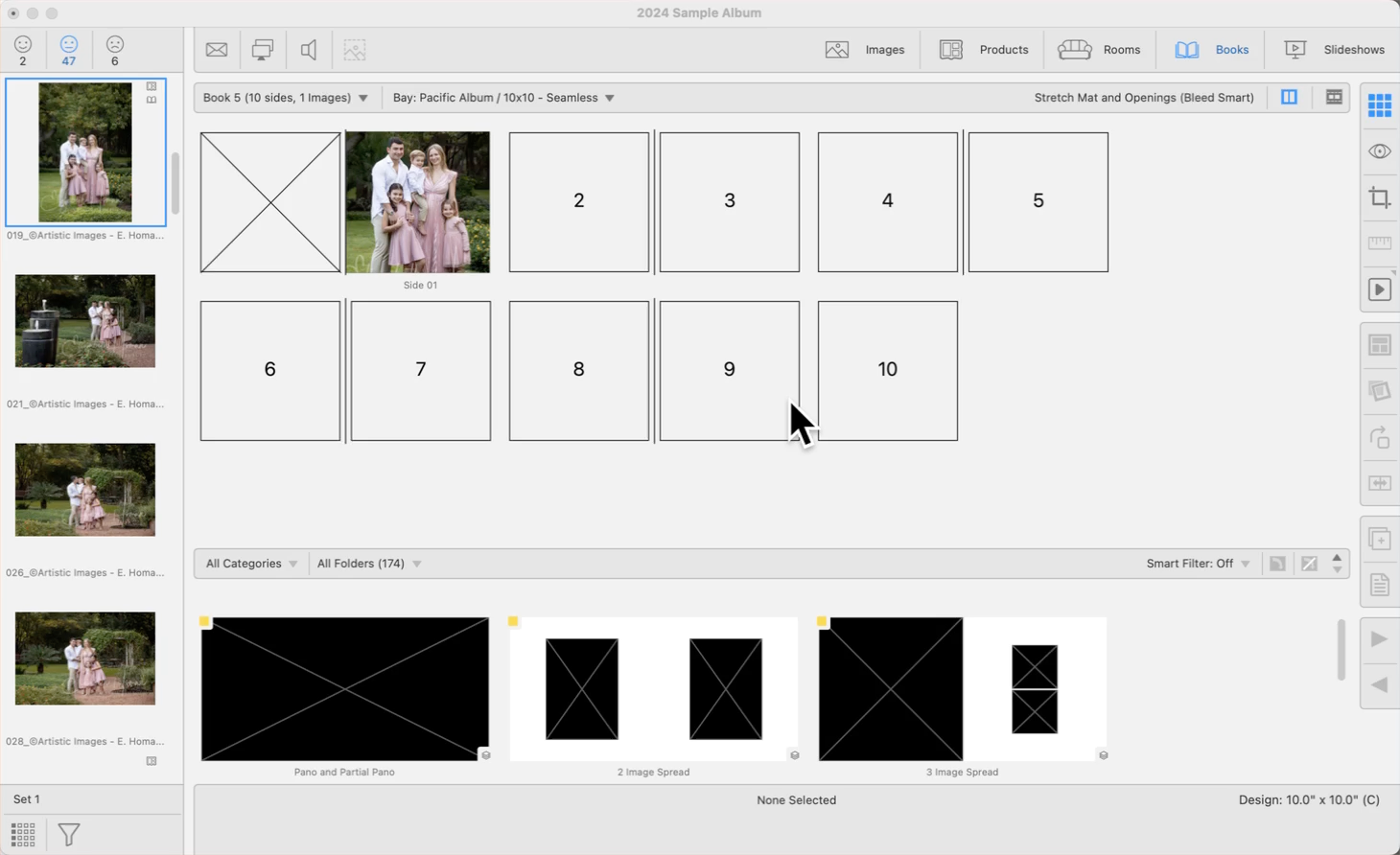
- Book page templates are located in the Book Page Template Resource Area.
- Find templates that match the design of the book. For example, use square page templates in a 12" X 12" book, but use vertical page templates in an 8" X 10" book. *It is possible to use a square book page in a vertical book and vice versa. Click here to learn more.
- Select the template and drag it into the display area. This action creates a new page layout based on the chosen template.
- Drag images from your image list and drop them into the page template.
- You can also double-click on this new layout to open it in the Show Pages view, where you can add your images.
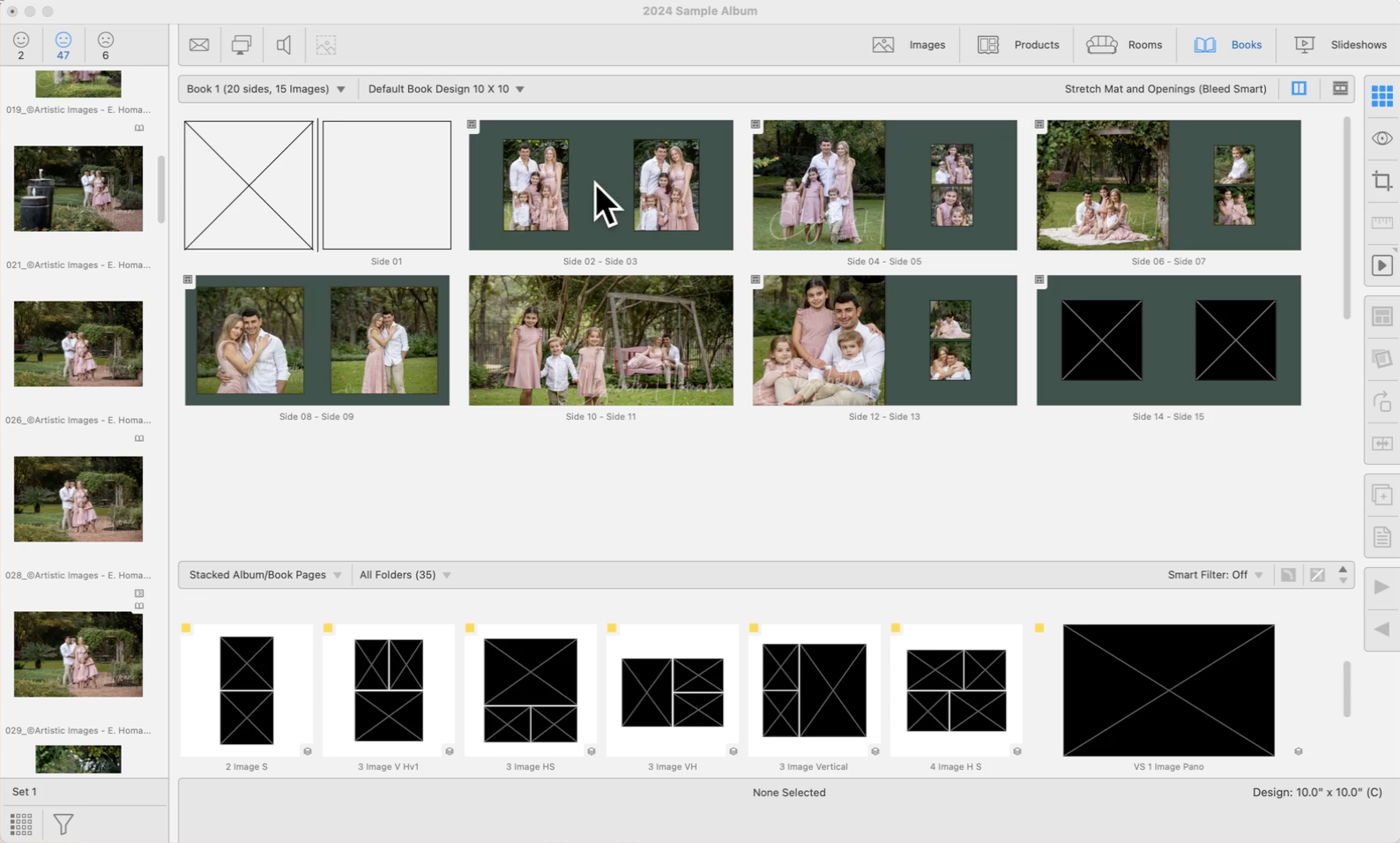
Adding Images Directly
You can also add a page by dragging an image (from the image list) directly onto a page template in the template resource area. This action not only adds the page template to your book but also populates the image into the newly created page.
- Right-click on the page you wish to remove.
- Select "Delete Page" from the list.
- Alternatively, select the page you want to remove and press the DeleteBackspace key.

- If you remove a page by mistake, you can quickly reverse the action by doing a CmdCtrl + Z to undo.
- To remove the images from a page (not the page itself), right-click on the page and select "Remove: Images."
Change Page Order
To change the order of your book pages, click and hold on the page you wish to move, then drag it to the desired location between other pages and release it to insert it there.
Swap Pages
Begin by clicking and dragging the page you want to swap. After you start dragging, hold down the OptionAlt key and drop it onto another page where you want to swap positions.
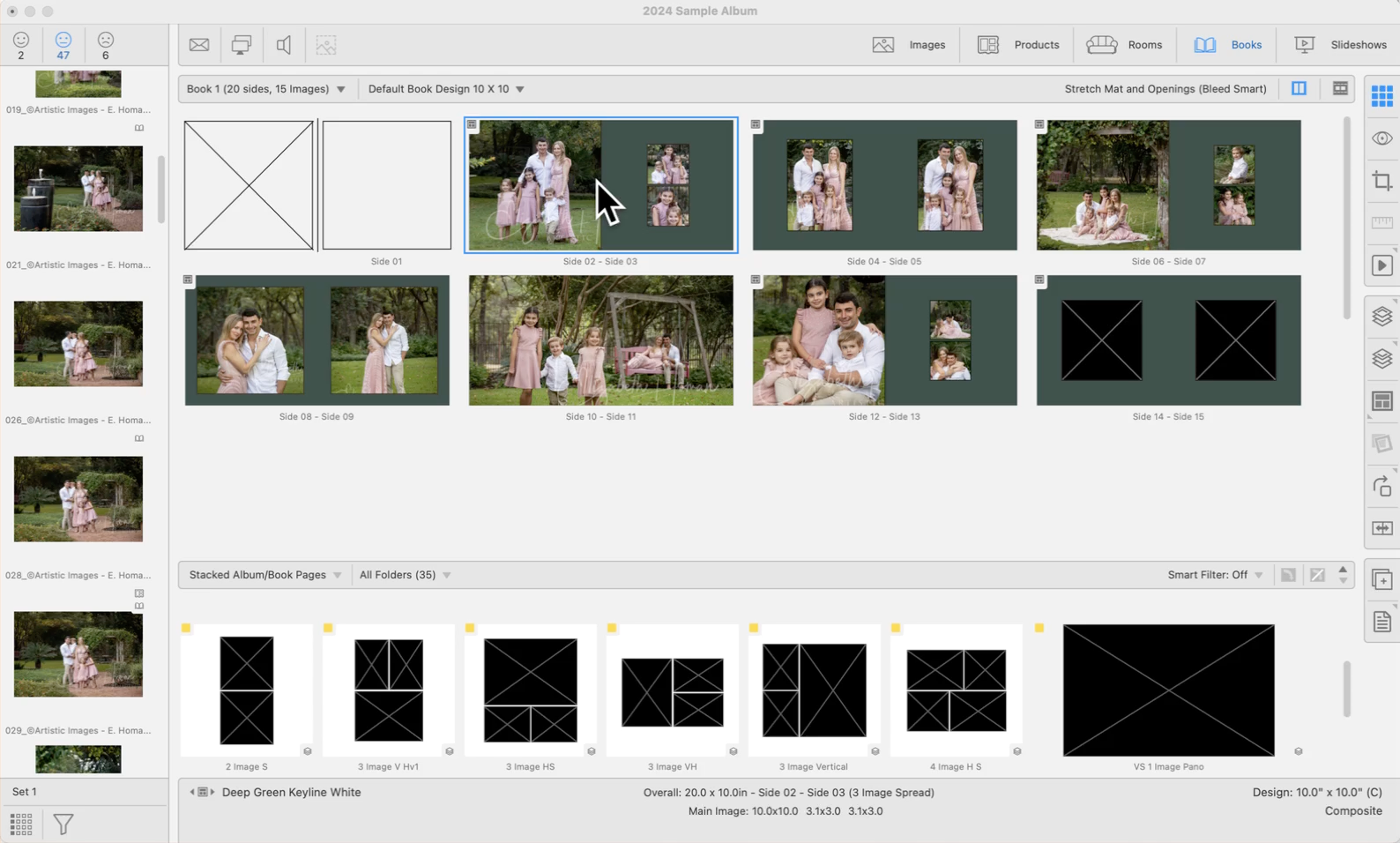
Swapping an Image
- Press and hold the OptionAlt key.
- Click on the image you want to move and start dragging it.
- Drop the image into another image opening. If the target opening already contains an image, the two images will automatically swap places. *Note: In Show Pages view, you can perform this same process without having to hold the OptionAlt key.
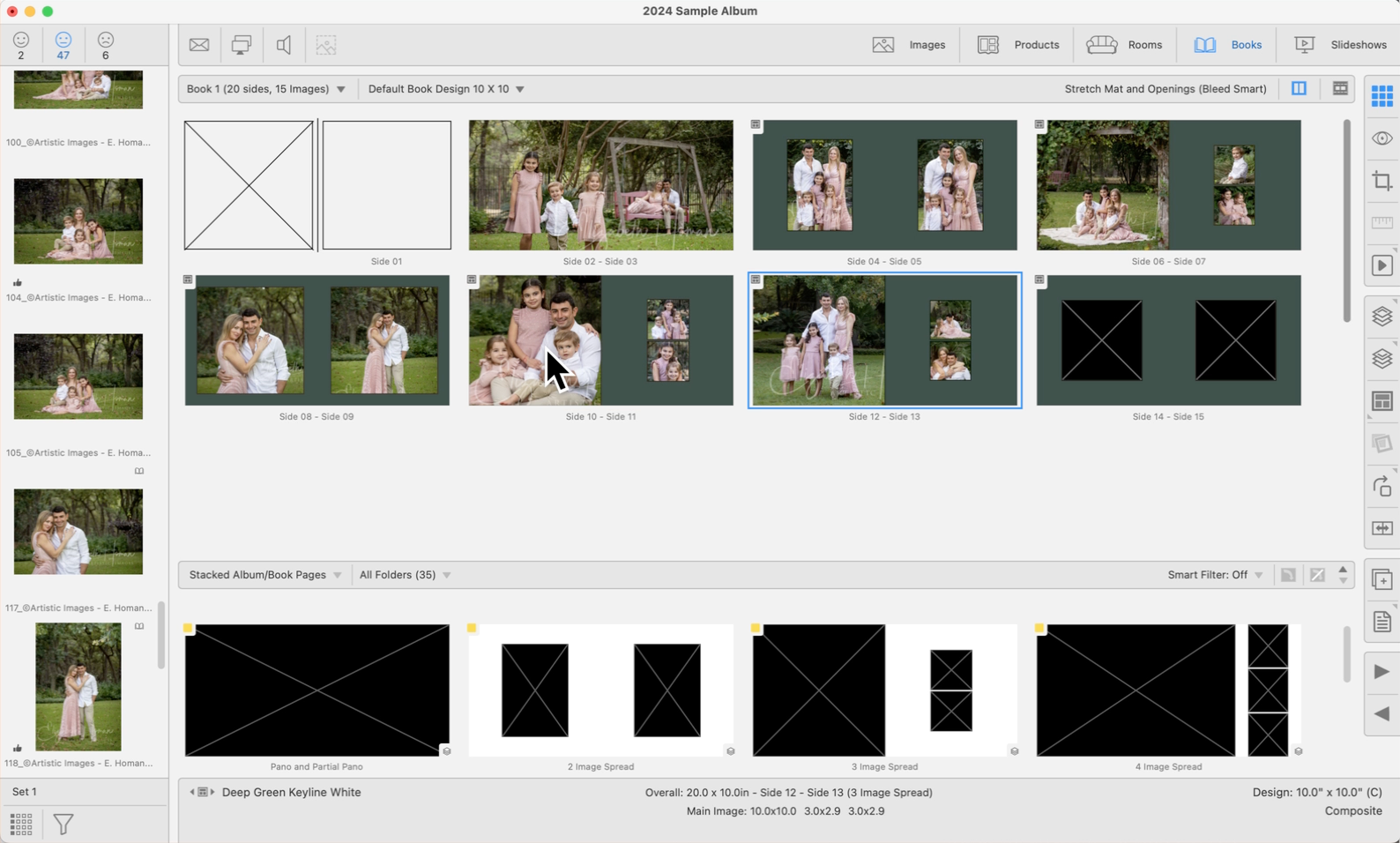
Swapping Templates
- Press and hold the OptionAlt key.
- Click on the page template you want from the resource area and start dragging it.
- Drop the page template onto the existing page template populated with images. The template will be swapped for the new one, containing the same images.
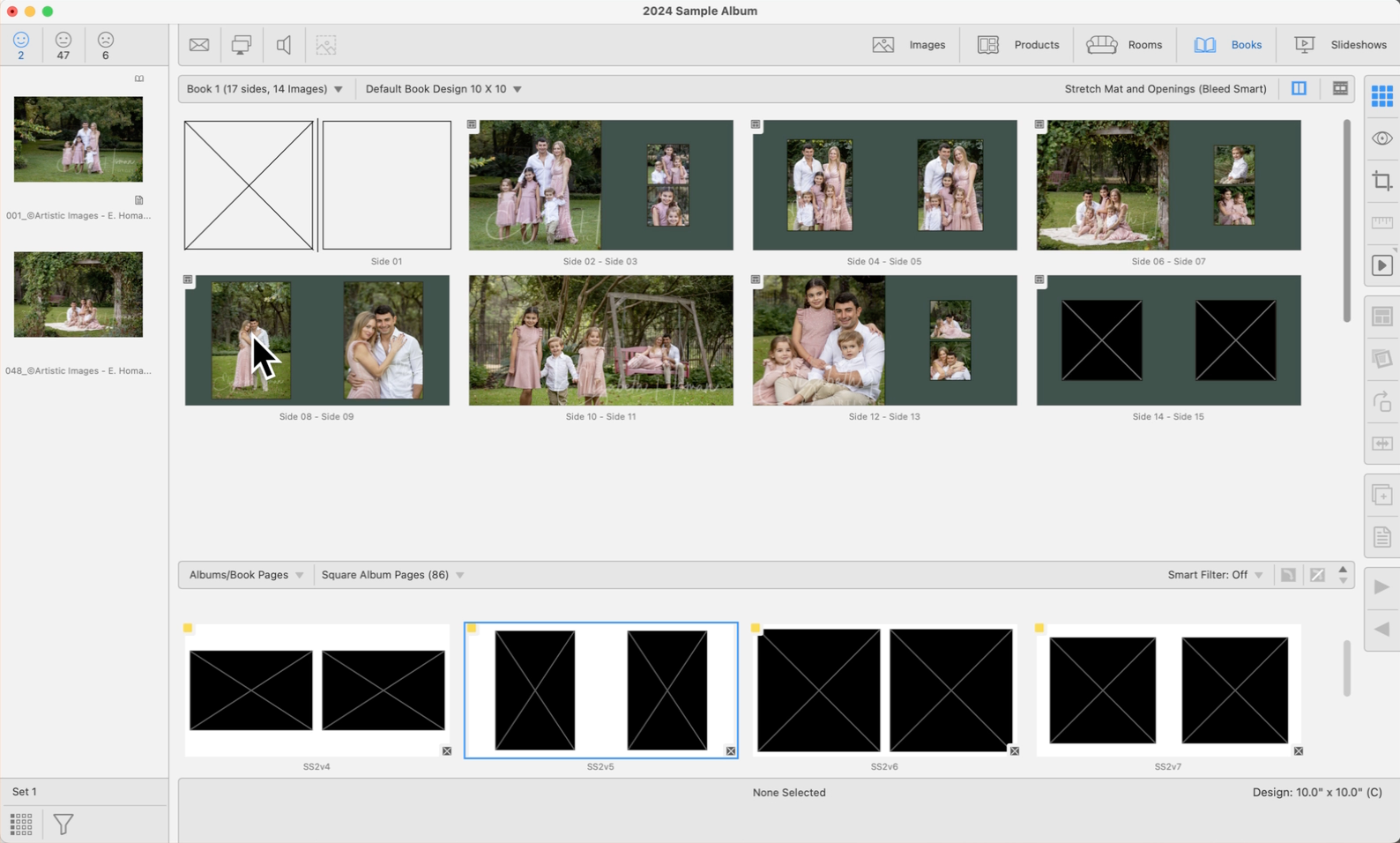
Filter By
The image list filter will allow you to view only your "favorite" images or images with a star rating.
- Click on the Image List Filter
 . It is located below the Image List.
 - Select "Favorite Images" or a star rating from the list.
- The Filter is now highlighted. Only images matching the selection criteria will display in the image list. The number of images remaining to be used is listed above the filter.
Hide Used Images
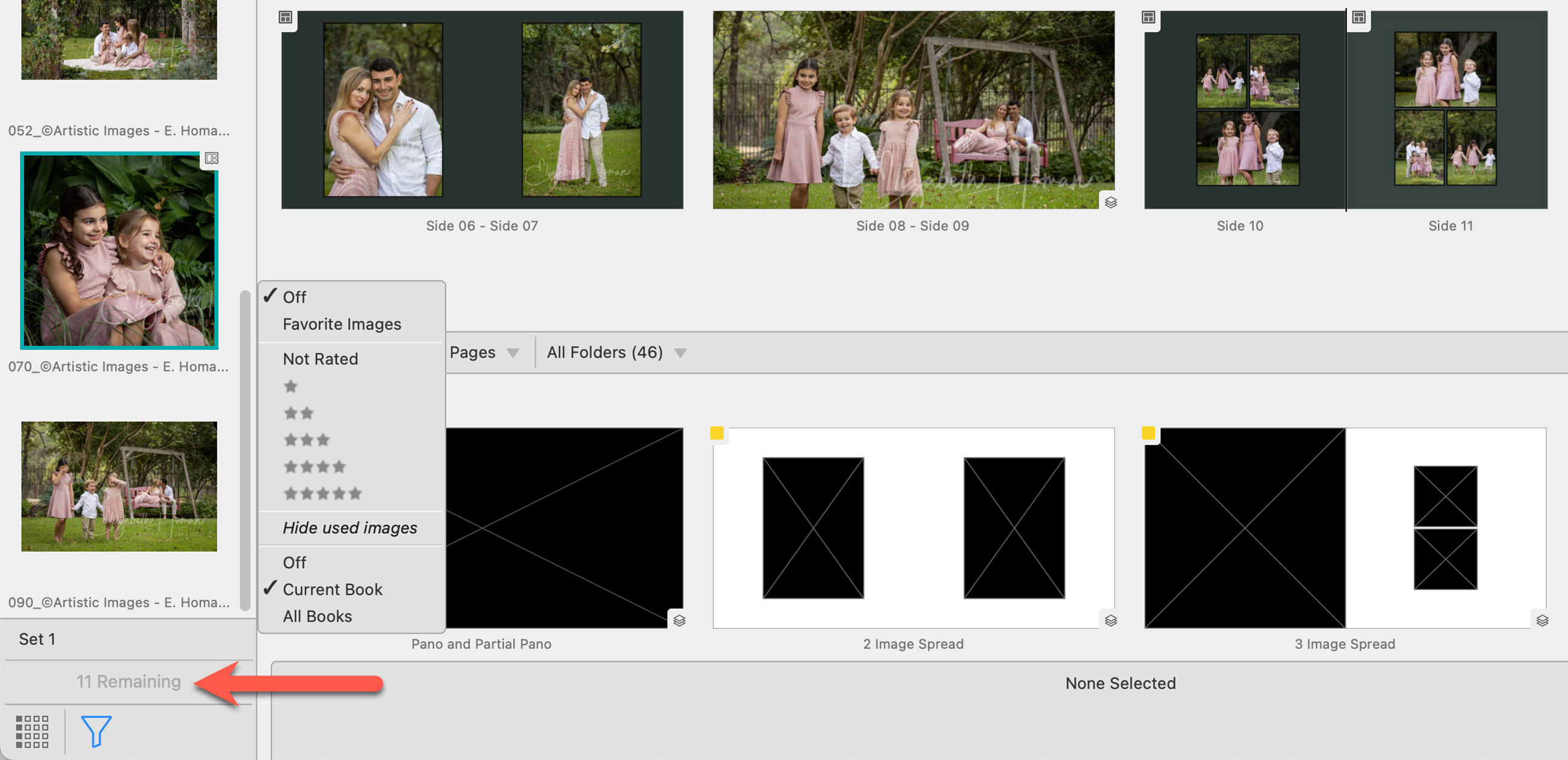
The image list filter allows you to hide images that have already been used either in the Current Book you're working on or across All Books you've created. This helps streamline your selection process by focusing on unused images, ensuring variety, and preventing duplicates in your book projects.
- Click on the Image List Filter . It is located below the Image List.
- Select "Current Book" or "All Books" from the list.
- The Filter is now highlighted. The number of images remaining to be used is listed above.
We are excited to announce that cover pages for books are currently in development and will be available soon.
Rotating Book Pages
Rotate book pages using the Rotate tool  . Note the following restrictions:
- You cannot rotate a double-spread.
- You cannot rotate a page with an overlay image applied.
- For traditional matted book pages, if your fitting options are not set to "Stretch Mats," a warning will be shown.
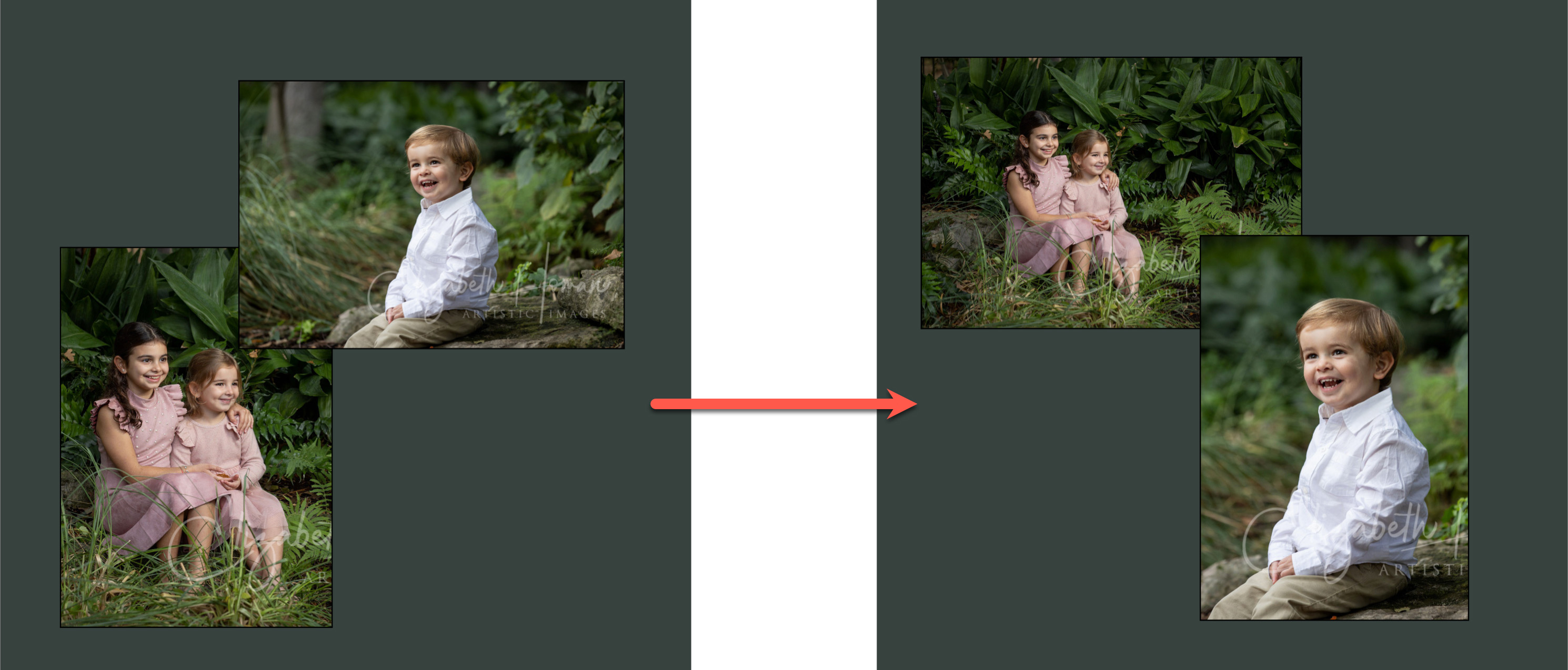
Flipping Book Pages
Flip book pages using the Flip Product Horizontal tool  .
.
You have the ability to create up to 5 different books. Books are located on the top left-hand side just above the thumbnails. They work in a similar way to Sets. This may be useful, for example, if you have created a book that you wish to display in more than one size.
Click on the drop-down arrow next to "Book 1" to reveal all books.
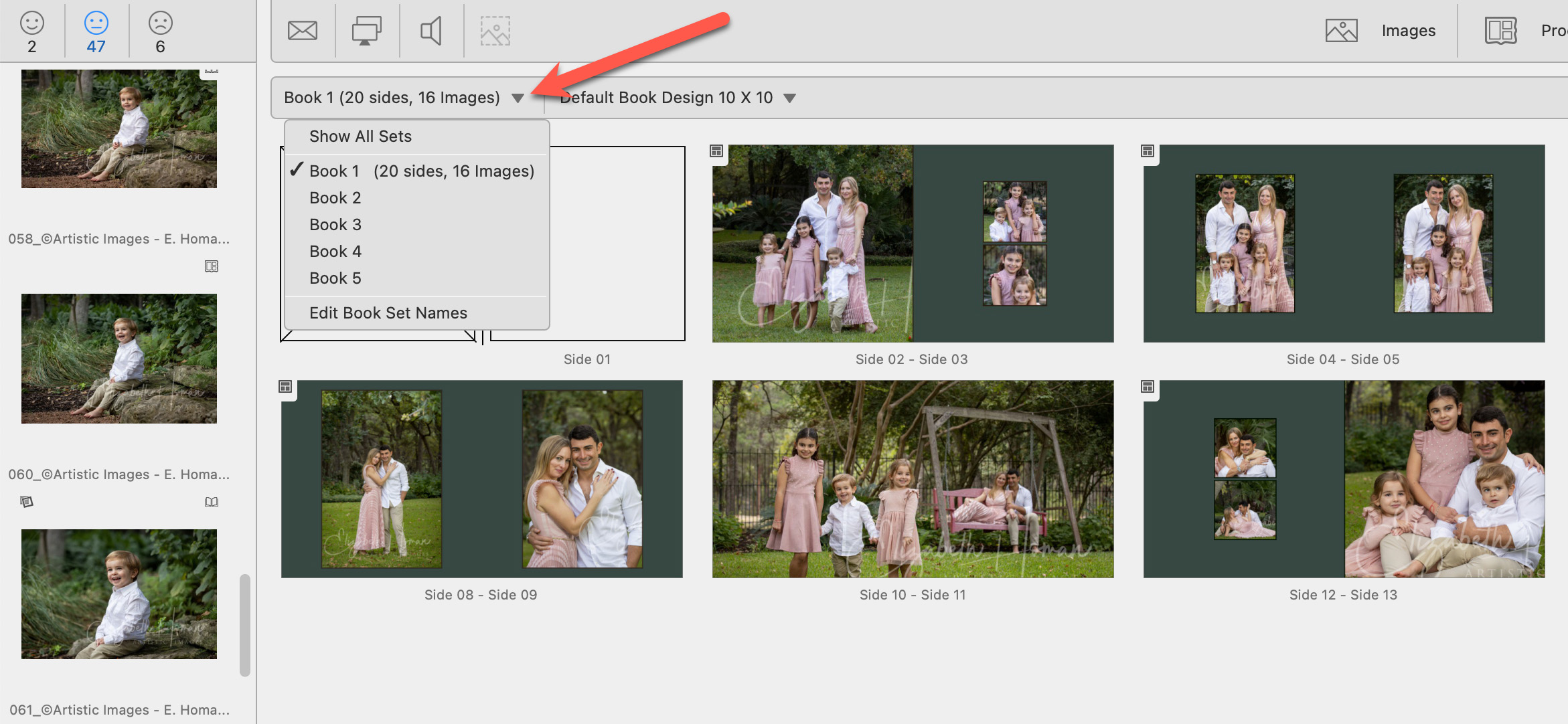
- From here you can select a book to view it, show all sets (books), or edit the book set names.
- By default, you will always be working within "Book 1."
- A checkmark appears next to the currently open book.
Show All Sets (Books)
Selecting "Show all Sets" will reveal all 5 books. Each book is represented by a folder.

- The currently selected book will be highlighted. The name of the book is shown to the right, followed by the book design.
- A checkmark on the folder indicates there are book pages in that set.
- Clicking on a folder will open the book and show all book pages in the Display Area below.
Moving/Copying Book Pages to Another Book
- Select "Show All Sets" from the drop-down menu.
- Select one or more book pages and drag and drop them into one of the other book folders.
- Alternatively, hold down the OptionAlt key while dragging to copy (make a duplicate) of the selected book page.
- A magenta box will appear around the book you are currently dragging items into.
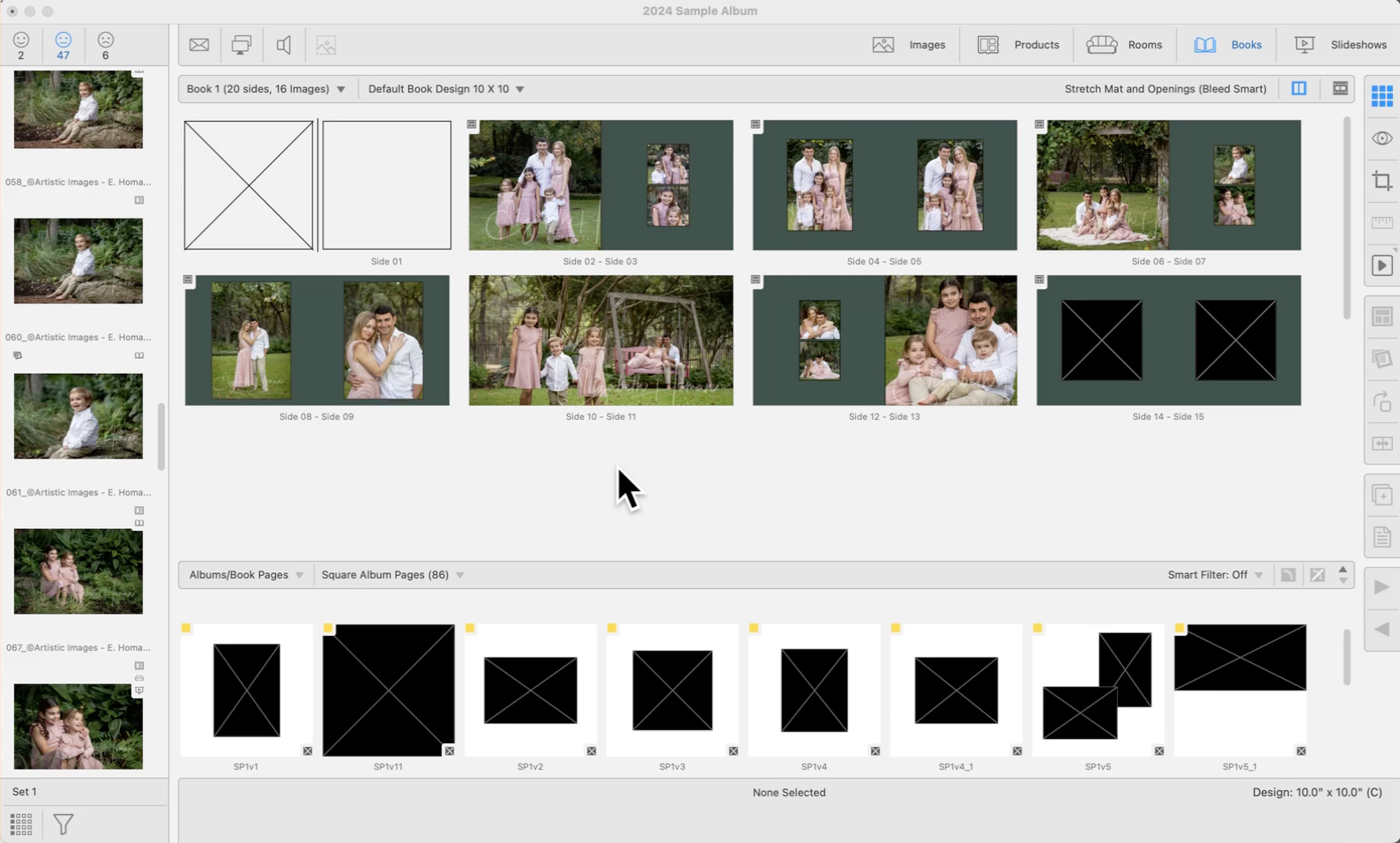
Editing Book Names
Select "Edit Book Set Names" from the drop-down list. Alternatively, go to the top menu, File > Change Set Names. The Edit Set Name dialog will appear.
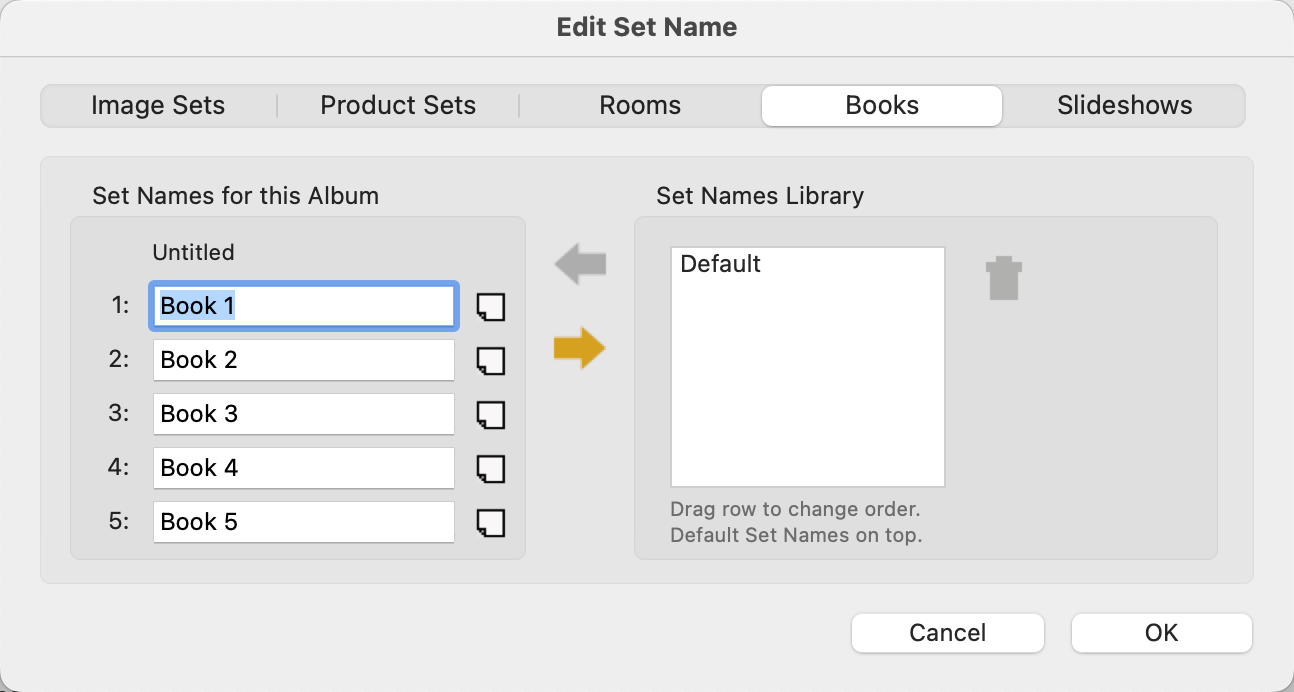
- You can either type in individual names for the books or select the names from the Set Names Library.
- Remember that "Book 1" will always be the default starting book.
Set Names Library
You can save frequently used Set names into the Set Name Library using the Save Arrow button (the lower one). Clicking on the arrow will make a copy of the set names you have created. You will be prompted to enter a name for the group. This group will then be saved and available to use in other working with modes.
Loading Set Names
By default, the top row of names in the Set Name Library is used when a new Album is started. To change this, drag the row of set names that you wish to use to the top row. To apply set names from the Library to your current Album, select the row of names that you want, click the Load Arrow button (the top one), and click OK.
Deleting Set Names
To delete a set of Set Names from the Library, select the row and click the Trash button . You cannot delete the last set.
Set Notes
You have the option of adding notes to each set. Click on the Notes tag  to open the Set Notes dialog.
Tools Available in Thumbnail View
Use the Previous/Next Stack tools to cycle through your stacked sizes. Wall Groupings, for example, are always a fixed size. To show different sizing options, you can create Stacked Sizes in the Product Editor. Book Pages also utilize stacked sizing. Click on Using Stacked Templates to learn more.
- Click on the Previous
 or Next
  Stack tools to go up or down a size.
 - Right-Click on the Previous or Next Stack tool and choose a size from the list.
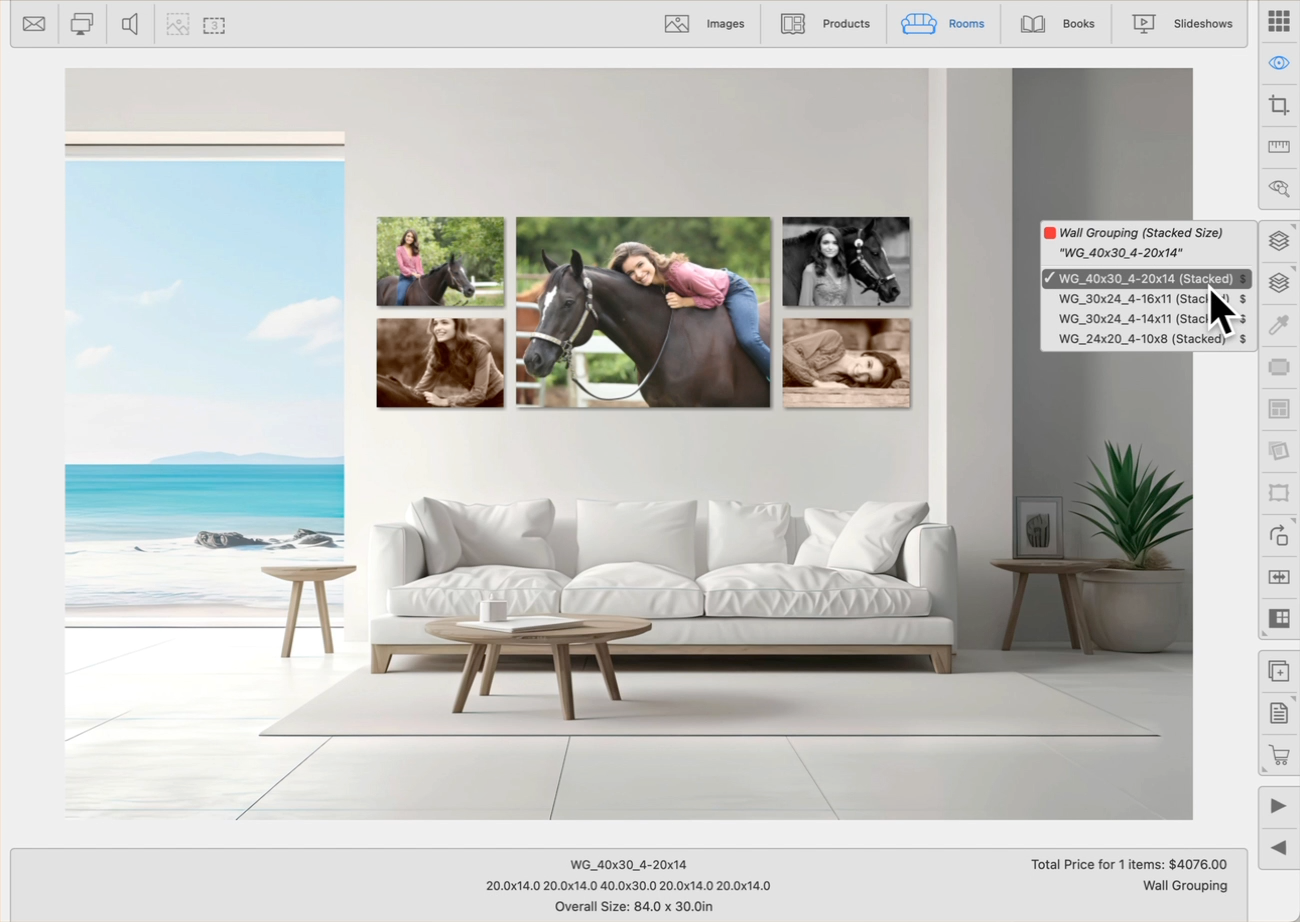
Right-Clicking on the Previous/Next Stack tool:
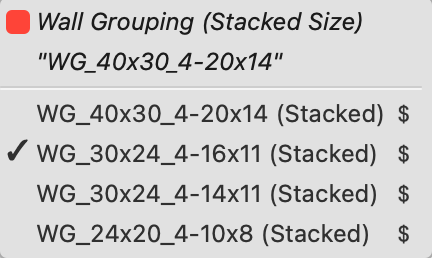
- The Product Type (Wall Grouping) is listed at the top, followed by the template name.
- All available stacked sizes will be listed.
- A checkmark appears next to the currently selected Stack.
This same concept also works for Books:
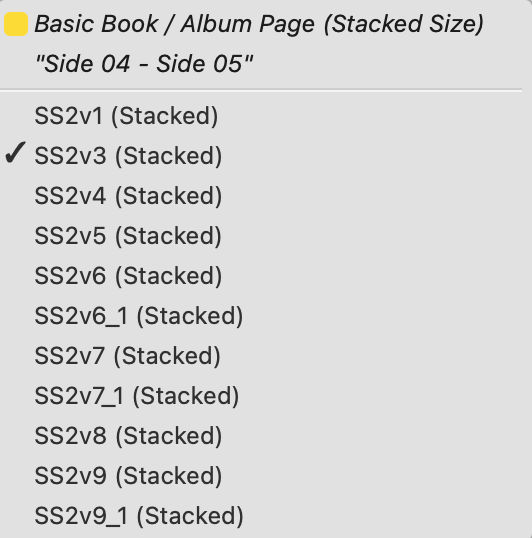
Use the Previous/Next Stack tools to cycle through your stacked sizes. Wall Groupings, for example, are always a fixed size. To show different sizing options, you can create Stacked Sizes in the Product Editor. Book Pages also utilize stacked sizing. Click on Using Stacked Templates to learn more.
- Click on the Previous or Next Stack tools to go up or down a size.
- Right-Click on the Previous or Next Stack tool and choose a size from the list.
Right-Clicking on the Previous/Next Stack tool:
- The Product Type (Wall Grouping) is listed at the top, followed by the template name.
- All available stacked sizes will be listed.
- A checkmark appears next to the currently selected Stack.
This same concept also works for Books:
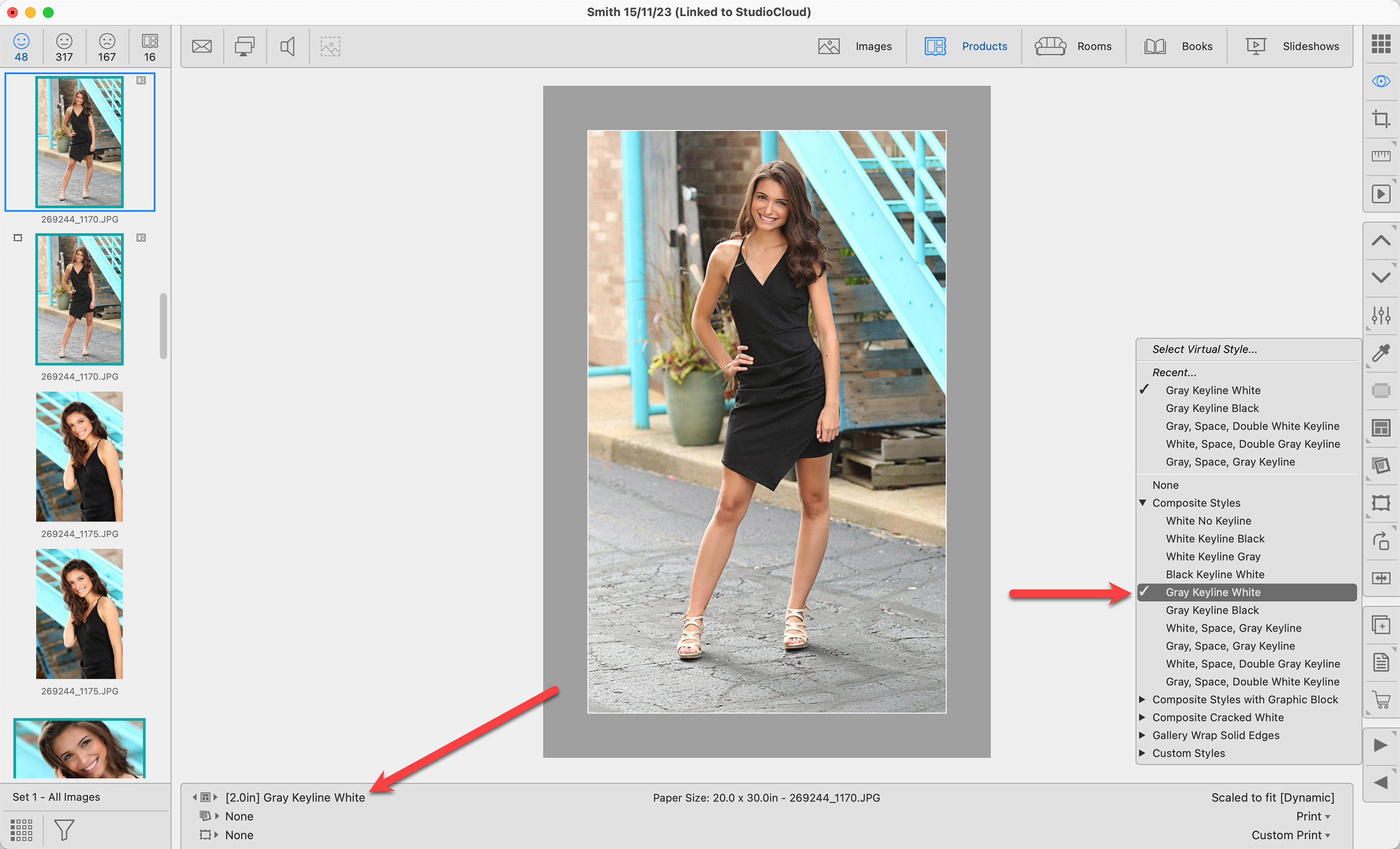
You can apply a Virtual Style to products as well as book pages from any View mode. Click on the Virtual Style tool in the toolbar to view the drop-down menu of available styles. Recently selected styles appear at the top. To remove the Virtual Style, select "none" from the list.
- Virtual Styles are set up in the Designer dialog. Go to the top menu, Products > Traditional Mats & Virtual Styles > Designer.
- The currently selected Virtual Style is shown in the left column of the Info Bar. The image is "pushed in" to allow space for the applied Virtual Style. The paper size remains the same. Click on Borders Inwards vs Borders Outwards to learn more about options for composite products with virtual styles applied.
- Virtual Styles applied to book pages work the same way.
The Select Edge / Style Color tool  allows you to customize the color of an applied Virtual Style. After creating a custom-colored Virtual Style, you can save it for future use. Click here to learn more.

You can remove all applied mats, frames, & virtual styles simultaneously by holding the OptionAlt key and then pressing the DeleteBackspace key on your keyboard.
You can apply a Traditional Mat to products or traditionally matted book pages from any View mode. Click on the Traditional Mat tool in the toolbar to view the drop-down menu of available mats. Recently selected mats appear at the top. To remove a mat, select "none" from the list.
Mats are set up in the Mat Designs dialog. Go to the top menu, Products > Mats > Mat Designs. By default, ProSelect uses a standard mat overlap setting of 0.25" for sizes up to 30 inches. For larger sizes, a mat overlap of 0.375 is applied. To adjust these settings, go to the top menu, Products > Traditional Mats & Virtual Styles > Traditional Mat Overlap.
- The currently selected mat and mat overlap are shown in the left column of the Info Bar.
- The overall size, including the mat, is listed in the center column. Traditional Mats are set on top of the print, so the overall size of the product is the paper size + the mat size.
- If a mat has been applied to a product, the Traditional Mat tag
 will appear on the thumbnail.
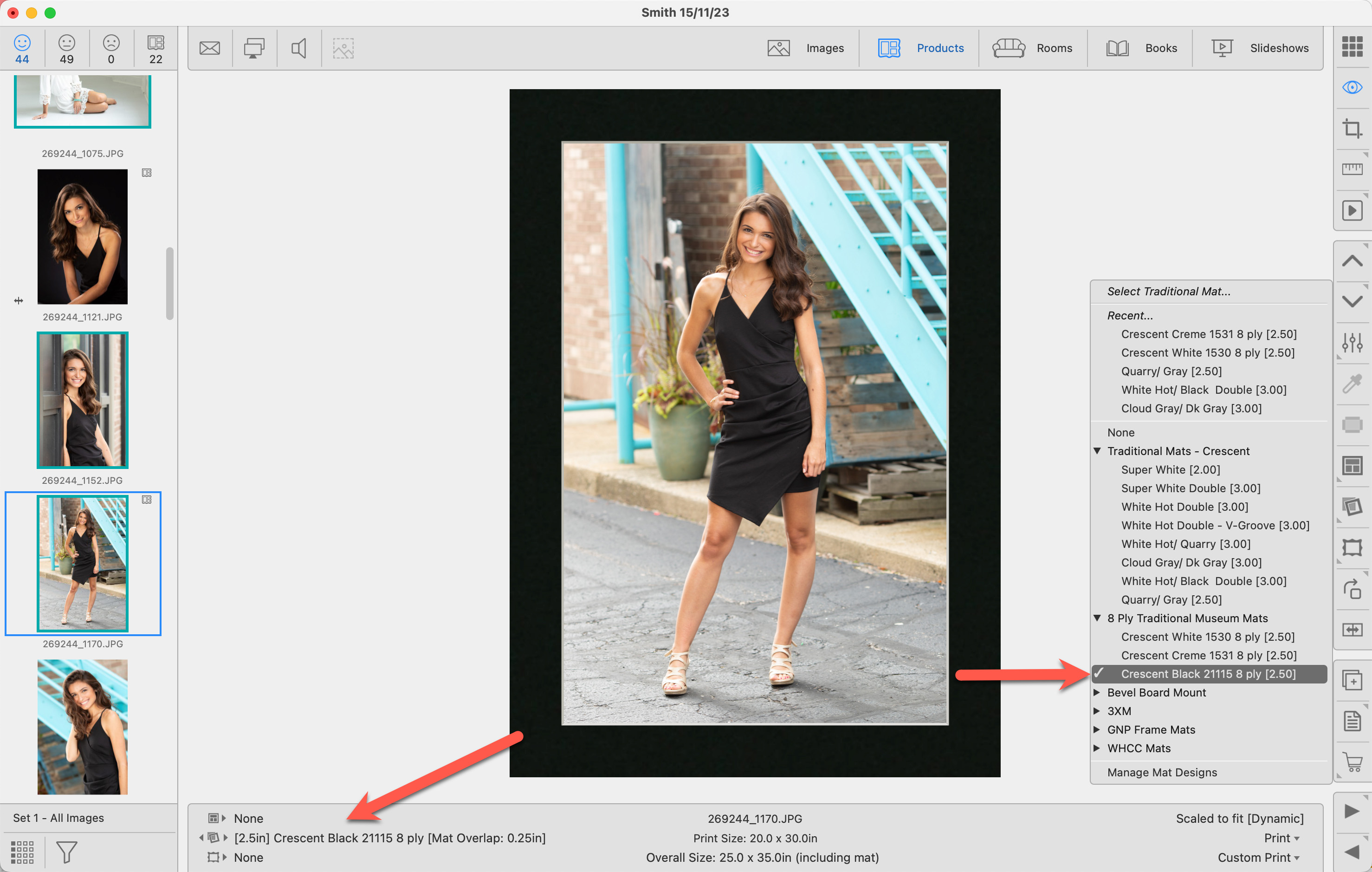
- If you notice red mat tags
 next to your mats, a detailed explanation can be found by clicking Frame Validation - Frame and Mat Selection Tags.
 - To quickly close (or open) all mat folders, hold down the Shift key while clicking on the disclosure arrow.
You can remove all applied mats, frames, & virtual styles simultaneously by holding the OptionAlt key and then pressing the DeleteBackspace key on your keyboard.
This tool will rotate the selected Image/Product/Book Page/Crop/Item 90 degrees clockwise.
- When Working with Products and Books, you can right-click on the Rotate tool, which allows you to select "Rotate Product & Images."
- Hold OptionAlt when rotating to rotate counterclockwise.
- If you are working with a Wall Grouping, see the Rotate Wall Grouping page.
Use the shortcut Cmd + RControl + R to rotate an image or product.
You can mirror a template using the Flip Product Horizontal tool.
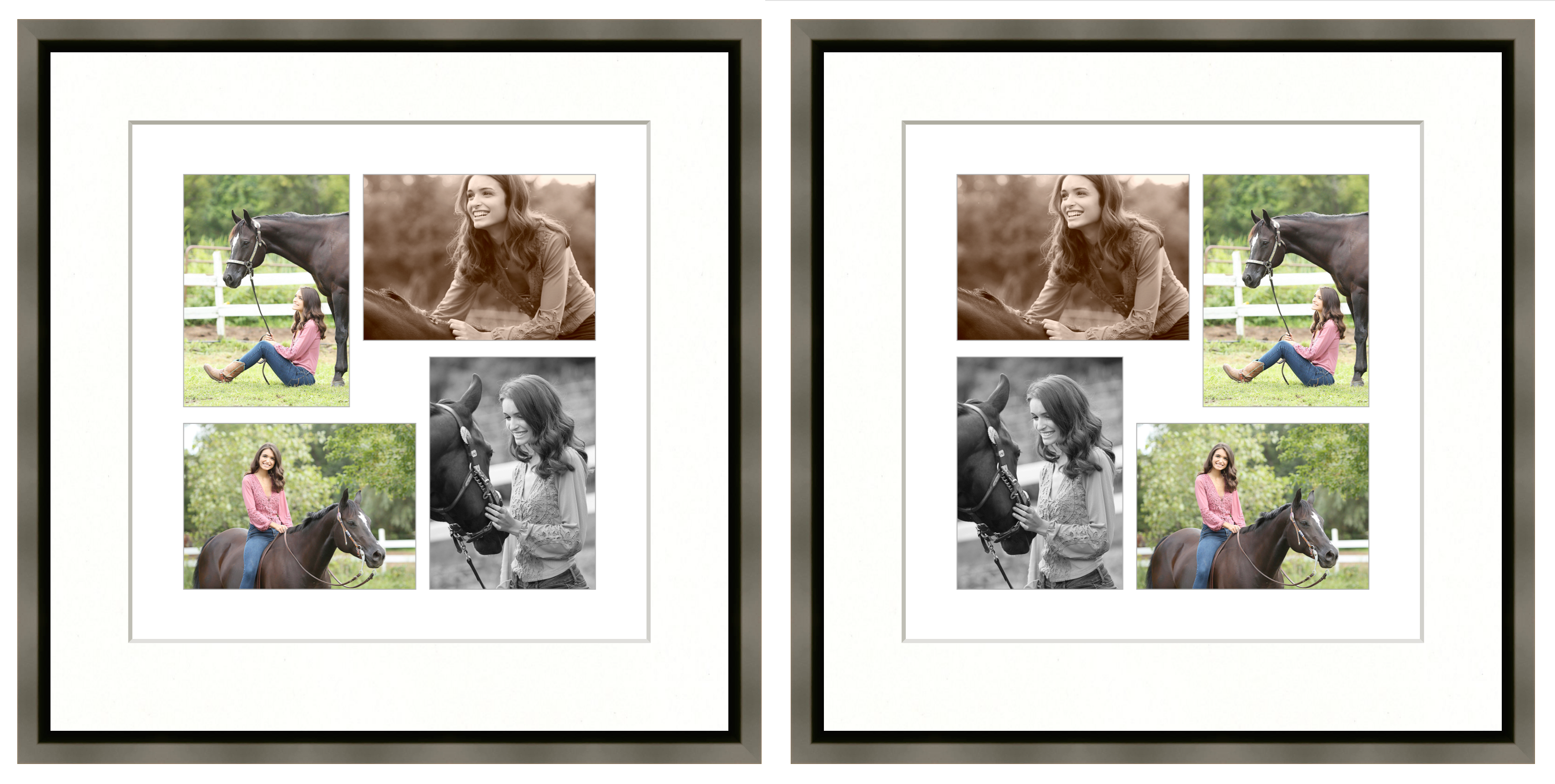
You can duplicate an image, product, book page, or room using the Duplicate tool.
- When duplicating images, each copy retains the original filename but has its own thumbnail.
- This feature is particularly useful when you want to view or order the same image/product with different effects.
- Simply duplicate the item and apply distinct effects to each copy. You can then select and display both copies, allowing for easy comparison of the different effects applied.
You have the option to add notes to images, products, books, or rooms. Notes are used as a reminder of any special changes that need to be applied to the images in a product, general product notes, or order requests. Click on Notes to learn more about where notes appear throughout ProSelect.
- Select an item and click on the Notes tool.
- The Notes dialog will open.
- You can manually add your own notes or add a note from your Notes Library.
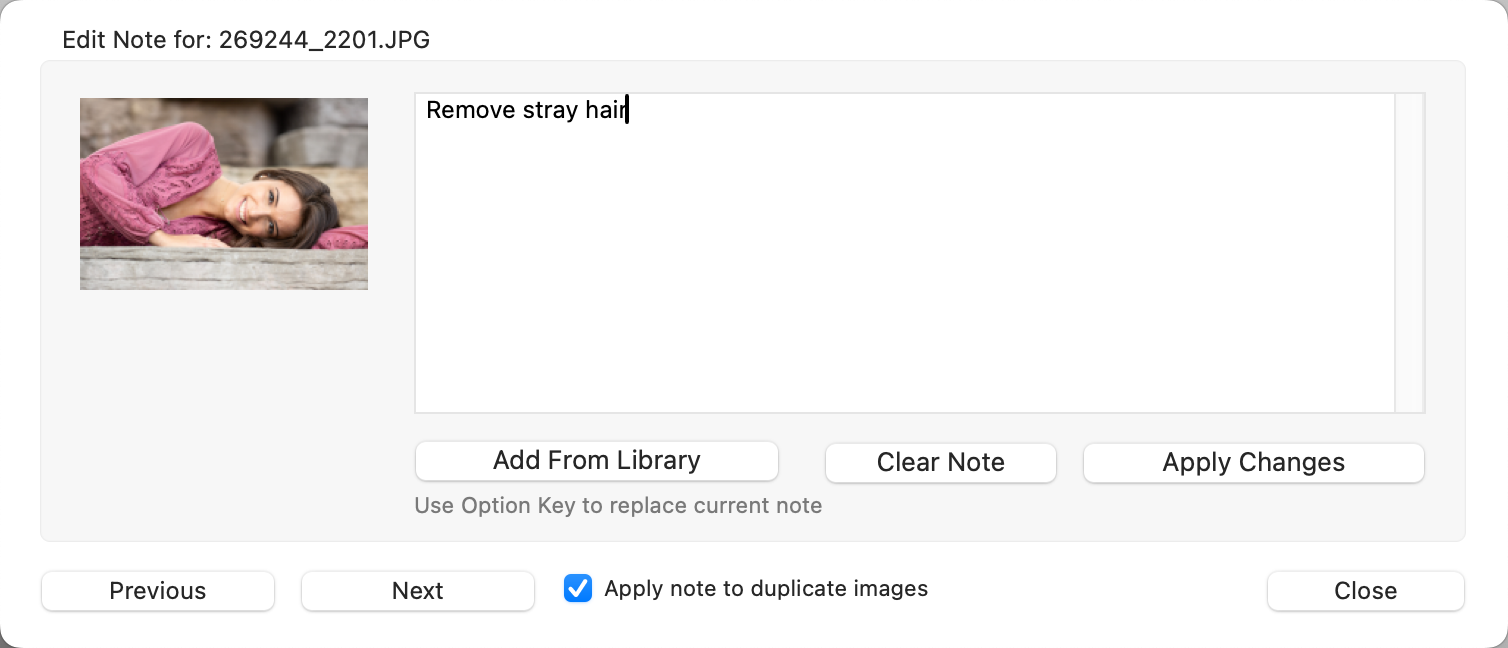
- Use the Previous and Next buttons to scroll through and add notes to other images/items within the set.
- If duplicate images appear, check this box to apply the note to duplicates as well.
- Use the Clear Note button to remove any notes.
- Click the Apply Changes button when you have finished adding or editing the note.
- You can add the same note to more than one image at a time by selecting all the relevant images before clicking on the Note tool.
- Notes added in Working with Images are applied to the individual image.
- Notes added in Working with Products or Working with Rooms are applied to the whole product or whole room. Not the individual image.
- Notes added to book pages apply to the book page, not the individual images.
Right-Click
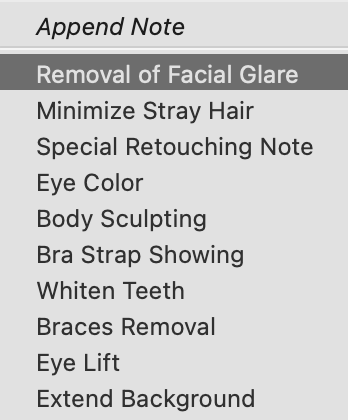
The Notes tool also has a right-click option. When you right-click, a drop-down menu of the Library Notes appears. You can select a commonly used note and add it. In this case, the note will be added without opening the Notes dialog.
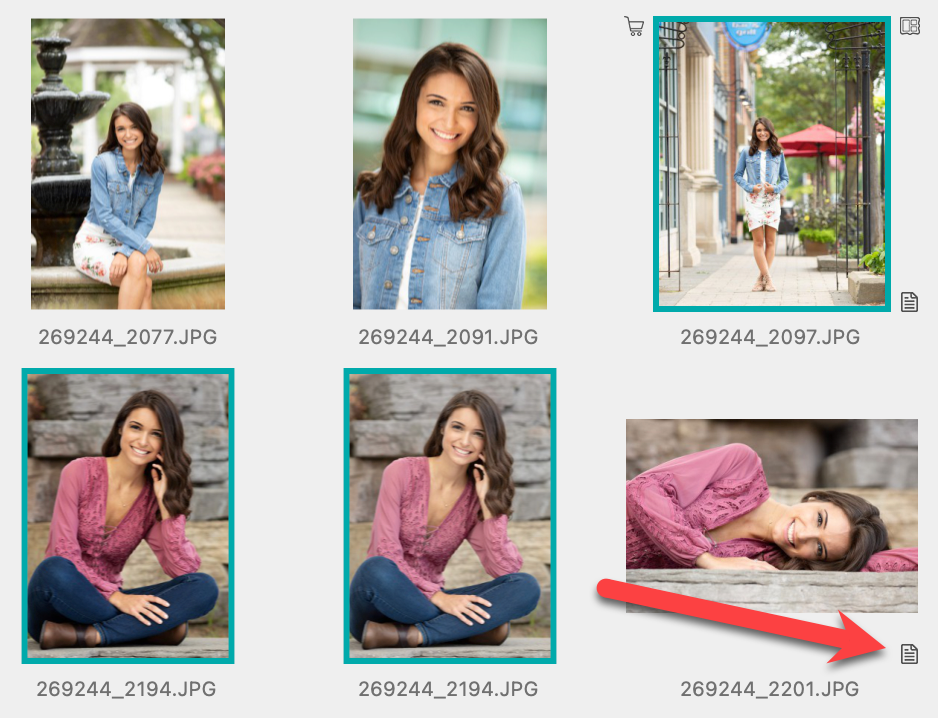
Notes Tag
All items with notes attached will have a small Notes tag  at the bottom-right corner of the thumbnail image.
Use the Next and Previous tools to navigate through your images, products, book pages, rooms, or slideshow slides.
- Use the Left and Right Arrow keys on your keyboard to navigate through your images, products, book pages, and slides.
- Use Shift + Left and Right Arrow keys to navigate through your rooms.
Jump in Groups
If you hold the OptionAlt key while clicking on the Next or Previous tool, the next group of items will be displayed. This group can be between 2 and 30 items. You can select the group size by right-clicking on the Next or Previous tools. This feature is only available in Show view and Cropping view.
Use the Next and Previous tools to navigate through your images, products, book pages, rooms, or slideshow slides.
- Use the Left and Right Arrow keys on your keyboard to navigate through your images, products, book pages, and slides.
- Use Shift + Left and Right Arrow keys to navigate through your rooms.
Jump in Groups
If you hold the OptionAlt key while clicking on the Next or Previous tool, the next group of items will be displayed. This group can be between 2 and 30 items. You can select the group size by right-clicking on the Next or Previous tools. This feature is only available in Show view and Cropping view.